
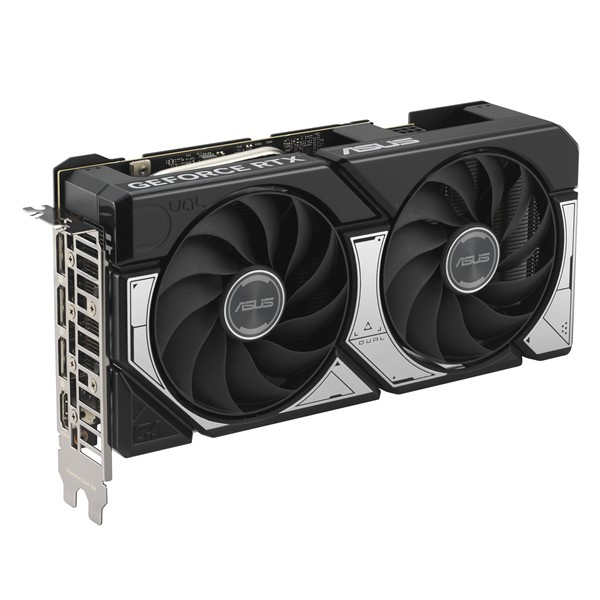


ASUS Dual GeForce RTX 5060 Ti 8GB
Speicher: 8GB GDDR7, 128bit, 28Gbps, 1750MHz, 448GB/?s
Takt Basis: 2407MHz (Standard-Profil), 2407MHz (OC-Profil)
Takt Boost: 2572MHz (Standard-Profil), 2602MHz (OC-Profil)
Übertaktung: +30MHz Boost (OC-Profil)
Kühlung: 2x Axial-Lüfter (95mm) mit 0dB-Zero-Fan-Modus (bis 55°C)
TDP/TGP: 180W (NVIDIA)
Stromanschlüsse: 1x 8-Pin PCIe
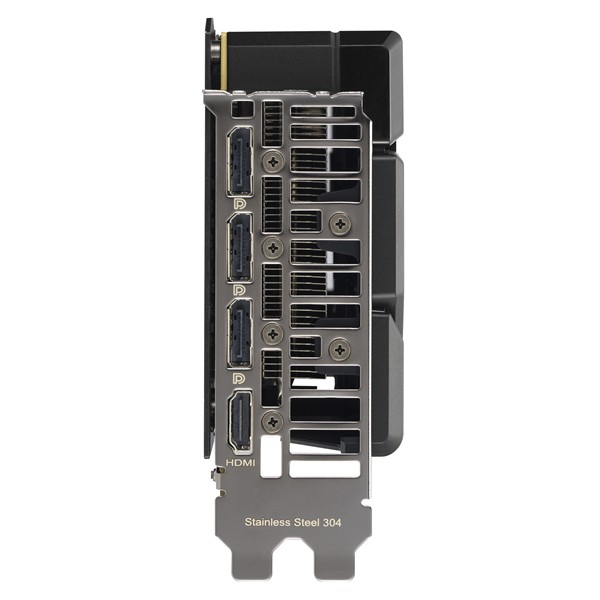
Anschlüsse: 1x HDMI 2.1b, 3x DisplayPort 2.1b UHBR20
Anbindung: PCIe 5.0 x16 (x8)
Info: Backplate, AI-Beschleunigung, Taktprofile (Default Mode/OC Mode), NVIDIA GeForce SFF-Ready
Gesamthöhe: Triple Slot (2.5 Slots)
Abmessungen: 229x120x50mm (LxBxH)
Bauform: PCIe-Karte (full height)
Slotblende: full height
AI-Rechenleistung (dense): 379.5 TOPS (FP4), 189.75 TOPS (FP8), 94.87 TOPS (FP16)
AI-Rechenleistung (sparse): 759 TOPS (FP4), 379.5 TOPS (FP8), 189.74 TOPS (FP16)
GPU-Rechenleistung: 23.96 TFLOPS (FP16), 23.96 TFLOPS (FP32), 0.37 TFLOPS (FP64)
Chip-Architektur: NVIDIA Blackwell (ab 2025/?Q1)
Chip-Bezeichnung: GB206 (GB206-300-A1)
Chip-Ausbau: Vollausbau (36/?36 SM)
Chip-Konfiguration: 36SM (4608SP/?144TMU/?48ROP), 36 RT-Cores, 144 Tensor-Cores, 32MiB L2-Cache
Chip-Fertigung: TSMC N5P [NVIDIA 4N] (5nm)
Chip-Größe: 181mm², monolithisch, 21.9 Mrd. Transistoren
Chip-Funktionen: Raytracing (4th Gen NVIDIA RTX, 72 TFLOPS), NVIDIA Tensor (5th Gen, 94.87 TOPS), HDCP 2.3
Chip-Verwendung: GeForce RTX 5060 Ti
GeForce RTX 5060: RTX PRO 2000 Blackwell
API-Unterstützung: DirectX 12 Ultimate (12_2) /? CUDA 12.8 /? Vulkan 1.3 /? OpenCL 3.0 /? OpenGL 4.6 /? Shader Model 6.8
Transcoding-Engine: 1x NVENC (9th Gen, max. Sessions: 8), 1x NVDEC (6th Gen)
Encoding: AV1 (YUV 4:2:0), H.265 (4K YUV 4:2:0 /? 4K YUV 4:2:2 /? 4K YUV 4:4:4 /? 4K Lossless /? 8K /? HEVC 10bit support /? HEVC B Frame support), H.264 (YUV 4:2:0 /? YUV 4:2:2 /? YUV 4:4:4 /? Lossless)
Decoding: AV1 (8bit /? 10bit), H.265 (8bit 4:2:0 /? 10bit 4:2:0 /? 12bit 4:2:0 /? 8bit 4:2:2 /? 10bit 4:2:2 /? 8bit 4:4:4 /? 10bit 4:4:4 /? 12bit 4:4:4), H.264 (8bit 4:2:0, 10bit 4:2:0, 8bit 4:2:2, 10bit 4:2:2), VP9 (8bit /? 10bit /? 12bit), VP8, VC-1, MPEG-2, MPEG-1
Takt Basis: 2407MHz (Standard-Profil), 2407MHz (OC-Profil)
Takt Boost: 2572MHz (Standard-Profil), 2602MHz (OC-Profil)
Übertaktung: +30MHz Boost (OC-Profil)
Kühlung: 2x Axial-Lüfter (95mm) mit 0dB-Zero-Fan-Modus (bis 55°C)
TDP/TGP: 180W (NVIDIA)
Stromanschlüsse: 1x 8-Pin PCIe
Anschlüsse: 1x HDMI 2.1b, 3x DisplayPort 2.1b UHBR20
Anbindung: PCIe 5.0 x16 (x8)
Info: Backplate, AI-Beschleunigung, Taktprofile (Default Mode/OC Mode), NVIDIA GeForce SFF-Ready
Gesamthöhe: Triple Slot (2.5 Slots)
Abmessungen: 229x120x50mm (LxBxH)
Bauform: PCIe-Karte (full height)
Slotblende: full height
AI-Rechenleistung (dense): 379.5 TOPS (FP4), 189.75 TOPS (FP8), 94.87 TOPS (FP16)
AI-Rechenleistung (sparse): 759 TOPS (FP4), 379.5 TOPS (FP8), 189.74 TOPS (FP16)
GPU-Rechenleistung: 23.96 TFLOPS (FP16), 23.96 TFLOPS (FP32), 0.37 TFLOPS (FP64)
Chip-Architektur: NVIDIA Blackwell (ab 2025/?Q1)
Chip-Bezeichnung: GB206 (GB206-300-A1)
Chip-Ausbau: Vollausbau (36/?36 SM)
Chip-Konfiguration: 36SM (4608SP/?144TMU/?48ROP), 36 RT-Cores, 144 Tensor-Cores, 32MiB L2-Cache
Chip-Fertigung: TSMC N5P [NVIDIA 4N] (5nm)
Chip-Größe: 181mm², monolithisch, 21.9 Mrd. Transistoren
Chip-Funktionen: Raytracing (4th Gen NVIDIA RTX, 72 TFLOPS), NVIDIA Tensor (5th Gen, 94.87 TOPS), HDCP 2.3
Chip-Verwendung: GeForce RTX 5060 Ti
GeForce RTX 5060: RTX PRO 2000 Blackwell
API-Unterstützung: DirectX 12 Ultimate (12_2) /? CUDA 12.8 /? Vulkan 1.3 /? OpenCL 3.0 /? OpenGL 4.6 /? Shader Model 6.8
Transcoding-Engine: 1x NVENC (9th Gen, max. Sessions: 8), 1x NVDEC (6th Gen)
Encoding: AV1 (YUV 4:2:0), H.265 (4K YUV 4:2:0 /? 4K YUV 4:2:2 /? 4K YUV 4:4:4 /? 4K Lossless /? 8K /? HEVC 10bit support /? HEVC B Frame support), H.264 (YUV 4:2:0 /? YUV 4:2:2 /? YUV 4:4:4 /? Lossless)
Decoding: AV1 (8bit /? 10bit), H.265 (8bit 4:2:0 /? 10bit 4:2:0 /? 12bit 4:2:0 /? 8bit 4:2:2 /? 10bit 4:2:2 /? 8bit 4:4:4 /? 10bit 4:4:4 /? 12bit 4:4:4), H.264 (8bit 4:2:0, 10bit 4:2:0, 8bit 4:2:2, 10bit 4:2:2), VP9 (8bit /? 10bit /? 12bit), VP8, VC-1, MPEG-2, MPEG-1
